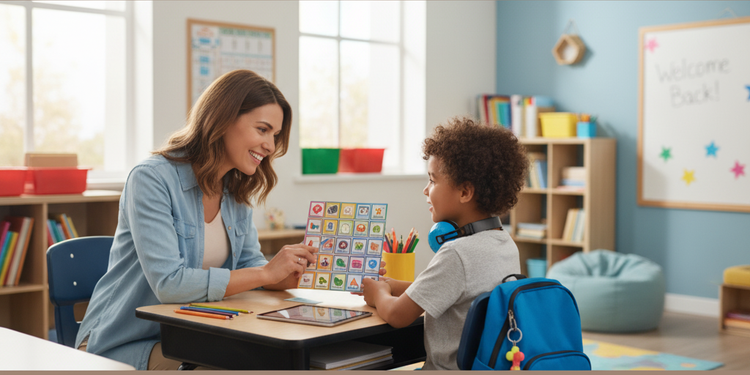
BACK TO SCHOOL
Supporting a Smooth Transition for Children with Autism
Early childhood education is the key to the betterment of society . Back to school is a building stone for future life of a child. Our back to school provides early childhood education and care for children from various culture and socio- economic backgrounds in the year prior to their entry in the grade.
This is a personal education program. program aims at supporting the psycho-motor, social- emotional, linguistic- cognitive development, self care skills and preparing the child for primary education.The program has four progressive levels to support a child’s overall development. Bright Beginners (Month 1) focuses on attention, problem-solving, eye–hand coordination, art and craft, and sharing skills. Shining Stars (Month 2) emphasizes outdoor activities and social interactions to build confidence and reduce anxiety. Bright Moon (Month 3) centers on home-based routines and practical skills like kitchen tasks, cleaning, and crafts. Glowing Sun (Month 4) prepares children for the classroom, teaching group attention, turn-taking, listening, and following instructions.
One of the important functions of preschool programs is to help children acquire learning-related skills, such as expressing thoughts, adapting behavior, controlling impulses, staying curious and focused, and being socially competent. School readiness is thus not just about basic language and math skills, but also about fostering self-regulation.

Back to School Program
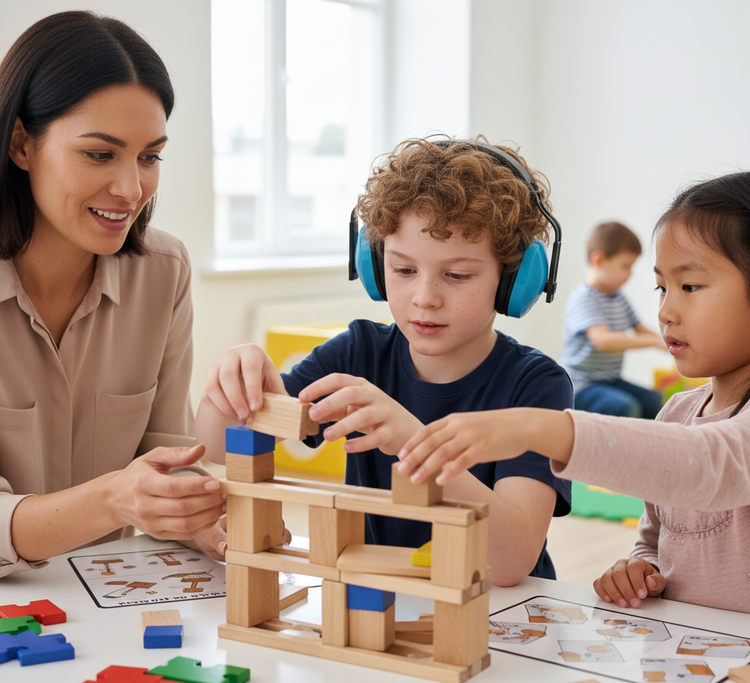
Level 1 – Bright Beginners
focusing on achieving attention, problem solving, decision making, group instruction following, eye hand coordination, art and craft, sharing skills.

Level 2 – Shining Stars
focusing on outdoor games, outdoor activities, involving more social situations.Helps to improve social interactions, reduce social anxiety and fear.

Level 3 – Bright Moon
focusing on home based activities and routine.we teach them how to behave in a home setup(kitchen activities,cleaning,home based art and craft work etc)

Level 4 – Glowing Sun
Mainly based on classroom. How to behave in a classroom setup.(group attention, turn taking,concentration,waiting, listening, instruction following).
Why the Back to School Program Is Important for Children with Autism
Children with autism often experience challenges with transitions, group learning, sensory demands, and following structured routines. A Back to School Program provides targeted, developmentally appropriate support to bridge the gap between home or therapy settings and the demands of a classroom environment.Through predictable routines, guided practice, and individualized support, children gain confidence, reduce anxiety, and learn skills essential for successful school participation.The Back to School Program is a structured, evidence-based early intervention designed to help children transition smoothly into formal schooling. Offered through a child development centre, this program focuses on building foundational learning, behavioural, and self-regulation skills required for classroom readiness.The program helps children develop:
- Attention and listening skills
- Classroom routines and structure awareness
- Early learning readiness skills
- Social interaction and group participation
- Emotional regulation and confidence
- Independence in daily tasks
Conditions Supported Through the Back to School Program
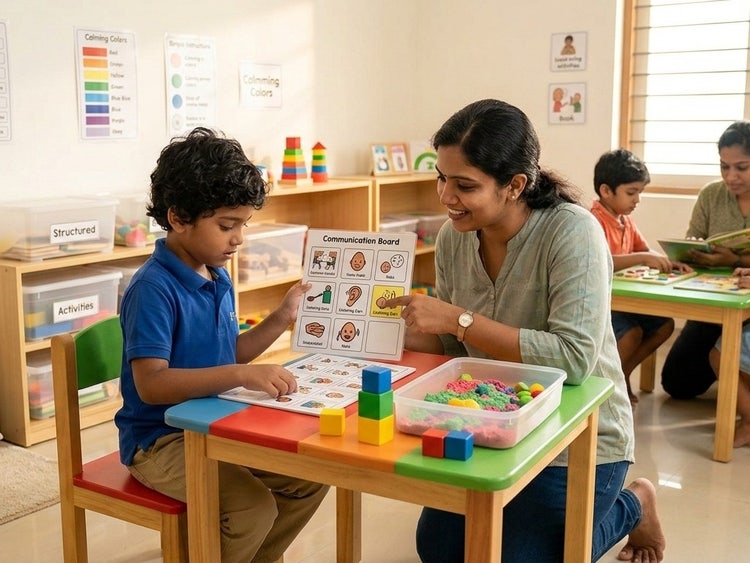
Autism Spectrum Disorder
Supports children with ASD in developing attention, communication, social participation, and classroom readiness skills needed for structured learning environments.
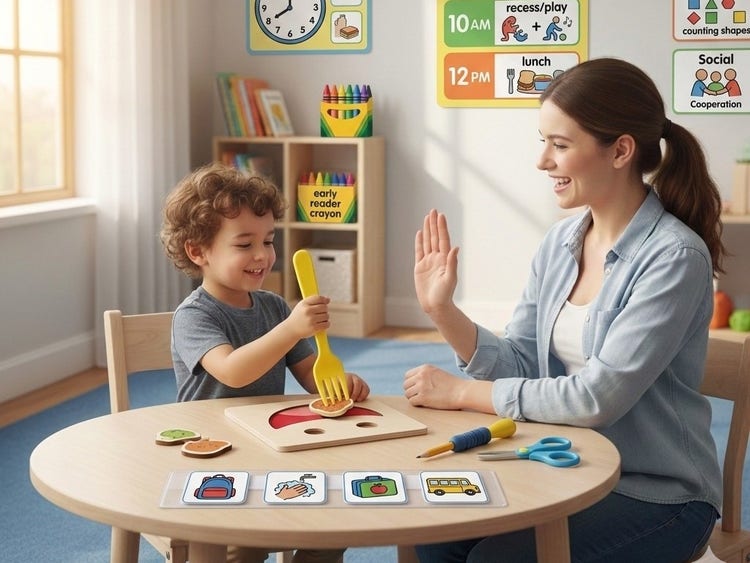
Developmental delays
Helps children who show delays across motor, cognitive, social, or adaptive domains build foundational skills required for school entry.
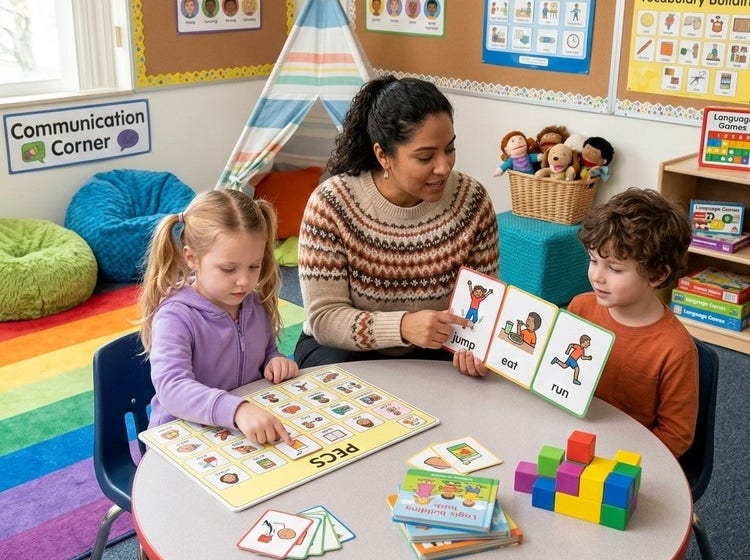
Speech and language delays
Assists children in improving comprehension, expressive language, and functional communication for classroom and peer interactions.

Attention and concentration difficulties
Supports children who struggle with focus, task completion, and following instructions within group learning settings.
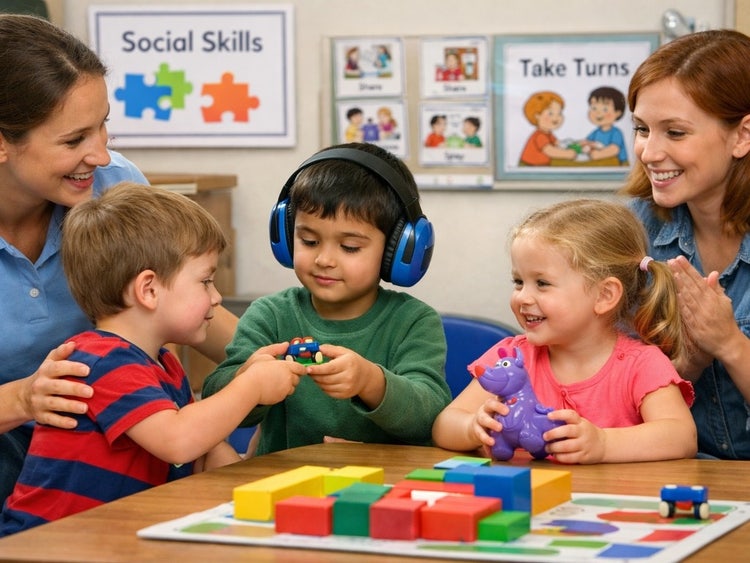
Social interaction challenges
Helps children develop age-appropriate social behaviours such as sharing, turn-taking, and cooperative play.

Mild learning
Prepares children who need additional support with pre-academic skills, routines, and behavioural regulation before entering formal schooling.
Signs Your Child May Need a Back to School Program
Some children benefit from additional support before starting school to help them adjust to structured routines, group learning, and classroom expectations. When early learning challenges are not addressed, children may experience difficulty coping with academic and social demands once formal schooling begins. Early intervention helps build skills gradually in a supportive environment.An evidence-based Back to School Program offered through a child development centre supports school readiness by building self-regulation, social participation, and learning-related skills essential for a smooth transition into primary education.
Your child may benefit from a Back to School Program if they:
- Have difficulty following group instructions
- Struggle with attention, sitting tolerance, or task completion
- Find it hard to interact with peers or share materials
- Show anxiety or withdrawal in new social environments
- Have limited independence in self-care or daily routines
- Need support adjusting to classroom structure and transitions
Recognized By Major Gulf & Indian News Platforms







What Parents Say

Shiba Shiny Babu
Jewel autism centre is a highly professional center for autistic kids. The staffs of jewel are very friendly and responsible. They have change the life of many kids including my cousins child. I appreciate each and every staff for their kind cooperation and dedication.

Nisthul Bensi
Jewel Autism Centre is a well developed centre in Kottayam for all the developmental issues in children. They provide Speech Therapy, Occupational Therapy, Special Education and Behavioral Therapy with qualified professionals. I highly recommend this centre.

John Mathew
Jewel Autism Centre is the best child development center in India which provides various services such as Speech Therapy, Occupational Therapy, Special Education, Physiotherapy, Behavioural Therapy and Child Psychology under the same roof.

Aksha Varghese
Really good place for therapy. All sorts of therapy are available. Many changes were observed after coming to this institution. Really good service was available.

Abey Varghese
It is a team approach. Which benefitted the child a lot. Many changes were observed in the child. Activities were also provided for the child to do at home. Really good and thrust worthy institution.

Mini Thomas
Our journey with jewel so far has been very good.Our son has shown good changes with 3 months therapy and we are planning to stay on more .We really appreciate the hard work put by therapists in understanding the child's needs and implementing a goal oriented approach.We high recommend this institute to everyone.

Rihan Jojo
My name is Anu from Palakkad. I brought my 4½-year-old son to Jewel with no speech or eye contact. Within one month, I saw great improvement—he started speaking, sitting better, and even writing letters. I’m very thankful to the caring therapists at Jewel.

Noah Rudra Rahul
Jewel Autism Center has been a wonderful choice for us. We’ve seen great progress in our son. The therapists are professional, caring, and involve parents in goal setting. My son enjoys the sessions, has a strong bond with the therapists, and the center feels like a second home.

Chimi pema Dakpa
Jewel Autism and Child Development Center is an excellent place with highly trained and dedicated therapists. The transparency of allowing parents to observe sessions is truly valuable. My son has shown remarkable progress in a short time, and I’ve also learned a lot as a mother. I’m very grateful to the entire Jewel team for their care and support.

Parvana
I’m grateful to the entire Jewel Autism Development Centre team for their dedication. When we joined, my daughter had poor eye contact, no response to her name, and attention difficulties. After a year of therapy, she has made remarkable progress. Special thanks to all the therapists and staff for their support.

Lionel
Jewel Autism and Development Center has been a great support for our child. In just five months, we’ve seen remarkable progress in communication, participation, and learning. We sincerely thank the management, therapists, and staff and highly recommend Jewel to other families.

Shiva Nadhu
We have been attending this therapy centre for the past six months and are very satisfied. The OT, SE, and Speech sections are excellent, with clear monthly goals and progress reviews. The therapists are professional, caring, and give personal attention, while the social work team is very supportive. We are seeing steady improvement and appreciate the team’s dedicated efforts.

Jake Nikhil
Jewel in Kottayam is a world-class facility with over two decades of experience in childhood development. Skilled therapists, efficient staff, and excellent management make it highly recommended for children needing developmental support. Families from across the world trust their international-standard care!

Anu Peter
"I've been taking my child to Jewel Child Development Center in Kakkanad for therapy, and the experience has been truly heartening. Finding the right support for your child can be overwhelming, but the team here makes the journey so much easier. The therapists are not only highly skilled but also genuinely bond with the kids, making the sessions feel more like guided play than clinical work. I've seen a visible shift in my child's confidence and skills since we started. They are also very transparent with progress reports, which helps us stay on track as parents. For anyone in the Kochi area looking for a supportive and professional environment for their child's growth, Jewel is definitely a place you can trust."