Introduction
Many parents and teachers notice when a child struggles to hold a pencil properly. The grip may look awkward, the child may press too hard or too lightly, or they may tire quickly during writing tasks.
It is natural to assume that the solution is more handwriting practice. However, pencil grasp is not just about writing — it is influenced by hand strength, coordination, posture, and sensory processing.
Improving pencil grasp requires a holistic approach that supports the underlying skills, not just the visible outcome.
What Is a Functional Pencil Grasp?
A functional pencil grasp allows a child to:
•Hold the pencil comfortably
•Move fingers efficiently
•Control pressure
•Write without fatigue
The most efficient grasp is typically the dynamic tripod grasp, where the thumb, index, and middle finger work together while the other fingers provide stability.
However, the goal is not perfection — it is function and comfort.
Why Some Children Struggle
Difficulties with pencil grasp may be related to:
•Weak hand muscles
•Poor finger coordination
•Limited hand separation (using whole hand instead of fingers)
•Reduced postural stability
•Sensory processing differences
Addressing these foundational areas improves grasp naturally.
5 Easy Ways to Improve Pencil Grasp
🟢 1. Strengthen the Hands Through Play
Before focusing on writing, build hand strength using fun activities:
•Playdough squeezing and rolling
•Using tongs or tweezers
•Clipping clothespins
•Tearing and crumpling paper
👉 These activities strengthen intrinsic hand muscles essential for grasp.
🔵 2. Encourage Proper Finger Positioning
Teach children to use their fingers rather than the whole hand.
Simple tips:
• Use short pencils or crayons (they promote tripod grasp)
• Try broken crayons to encourage finger control
• Use pencil grips if needed (as support, not dependence)
🟡 3. Promote Wrist Stability
A stable wrist allows better finger movement.
Helpful strategies:
•Writing on vertical surfaces (walls, easels)
•Drawing on slanted boards
•Coloring while standing
👉 This naturally positions the wrist in extension, improving control.
🔴 4. Build Core and Shoulder Strength
Surprisingly, pencil grasp starts at the shoulder.
Activities to support this:
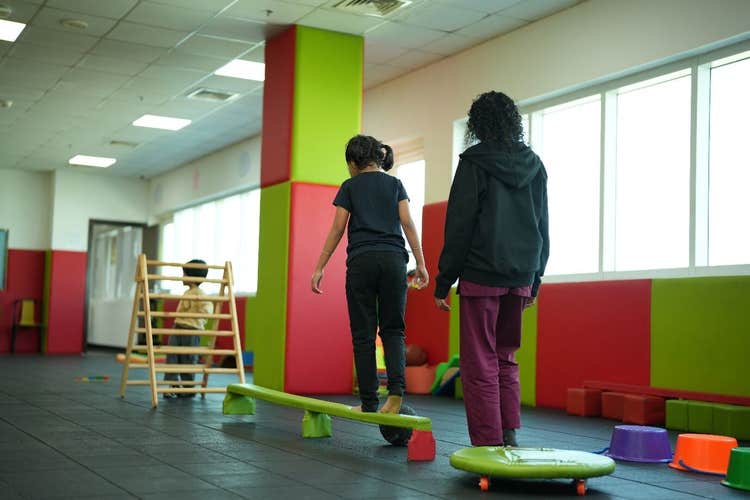
•Crawling
•Climbing
•Wheelbarrow walking
•Pushing heavy objects
According to developmental principles, proximal stability supports distal control.
🟣 5. Keep Practice Short and Meaningful
Avoid long, repetitive writing sessions.
Instead:
•Practice in short bursts
•Use engaging activities (drawing, games, tracing)
•Focus on quality over quantity
Children learn better when they are motivated and not fatigued.
Common Mistakes to Avoid
❌ Forcing a specific grip too early
❌ Over-correcting constantly
❌ Focusing only on writing practice
❌ Ignoring underlying strength and posture
Pencil grasp develops over time and varies across children.
When to Seek Help
Consider consulting a pediatric occupational therapist if:
•The child avoids writing tasks
•Shows significant fatigue
•Uses excessive pressure
•Has difficulty controlling movements
•Experiences frustration or low confidence
Early support can improve both skill and motivation.
Final Thoughts
Improving pencil grasp is not about forcing the “right” grip — it is about building the right foundation.
When children develop strength, coordination, and control through play and meaningful activities, their pencil grasp improves naturally.
Because strong hands create confident writers.
References
Ayres, A. J. (1979). Sensory integration and the child. Western Psychological Services.
Bundy, A. C., Lane, S. J., & Murray, E. A. (2008). Sensory integration: Theory and practice (2nd ed.). F.A. Davis.