
REMEDIAL EDUCATION
Best Special Education for Autism & Learning Disabilities in India | Jewel Autism Centre
Jewel Autism Centre provides structured, individualized Special Education services in India for children with Autism Spectrum Disorder (ASD), ADHD, learning disabilities, developmental delay, intellectual disability, and social communication challenges. Our Special Education programs in Kochi and Kottayam are designed to support children who require additional academic and developmental assistance to succeed in learning environments.
Our intervention focuses on improving academic readiness, cognitive development, functional literacy, numeracy skills, attention, classroom behavior, and independent learning. Children are supported through carefully planned instruction that addresses gaps in foundational skills while gradually progressing toward age-appropriate academic expectations.
We follow an Individualized Education Plan (IEP)–based approach tailored to each child’s developmental level, learning style, and functional abilities. Instruction is delivered through structured, step-by-step teaching using multisensory strategies such as visual supports, hands-on activities, auditory cues, and kinesthetic learning to enhance understanding.Our goal is to empower children to become confident, independent learners for meaningful participation in school and daily life.

What is Special Education?

Special Education is a structured educational approach designed for children who require individualized teaching strategies due to developmental, cognitive, behavioral, or learning differences.Special education supports children in:
- Academic skill development
- Literacy and numeracy
- Attention and task completion
- Functional life skills
- Classroom behavior
- Social participation
- Independent learning skills
For children with autism and developmental challenges, special education bridges the gap between therapy and academic success.Through individualized, structured support, special education helps children build skills and independence for academic success and everyday life.
Special Education for Autism in India
Children with Autism Spectrum Disorder often need specialised educational support to engage in learning and classroom routines. At Jewel Autism Centre India, our Special Education for Autism uses evidence-informed, predictable learning approaches to support engagement and confidence.
- Attention and focus
- Understanding instructions
- Language comprehension
- Classroom behavior
- Academic learning pace
Our educators address learning needs through structured instruction, task breakdown, and reinforcement using visual supports, repetition, and hands-on activities. At Jewel Autism Centre India, our Special Education for Autism focuses on:
- Individualized academic programs
- Structured teaching methods
- Visual learning supports
- Behavior management strategies
- Communication-integrated instruction
- School readiness training

Individualized Education Plan (IEP) Model
At Jewel Autism Centre India, the Individualized Education Plan (IEP) model forms the foundation of our Special Education services. Every child learns differently, and the IEP allows us to design instruction that is specifically aligned with a child’s cognitive level, learning style, and developmental needs rather than relying on a one-size-fits-all approach.The IEP process begins with a comprehensive educational assessment to understand the child’s current abilities, learning gaps, and functional strengths. Based on this assessment, our educators collaborate with parents to define realistic, meaningful goals that support academic development, classroom participation, and independent learning. Goals are broken down into short-term and long-term objectives, ensuring that progress is gradual, measurable, and achievable.Our structured Individualized Education Plan (IEP) model includes:
- Comprehensive educational assessment
- Identification of strengths and needs
- Personalized academic goals
- Short-term and long-term objectives
- Measurable progress tracking
- Parent collaboration
- School coordination (when required)
Regular monitoring and data tracking allow the IEP to be reviewed and adjusted as the child progresses, ensuring that goals remain relevant and achievable. This ongoing review process helps educators respond effectively to the child’s changing learning needs and developmental growth. IEP-based special education promotes structured, goal-oriented academic progress while supporting confidence, consistency, and long-term independence across learning environments.
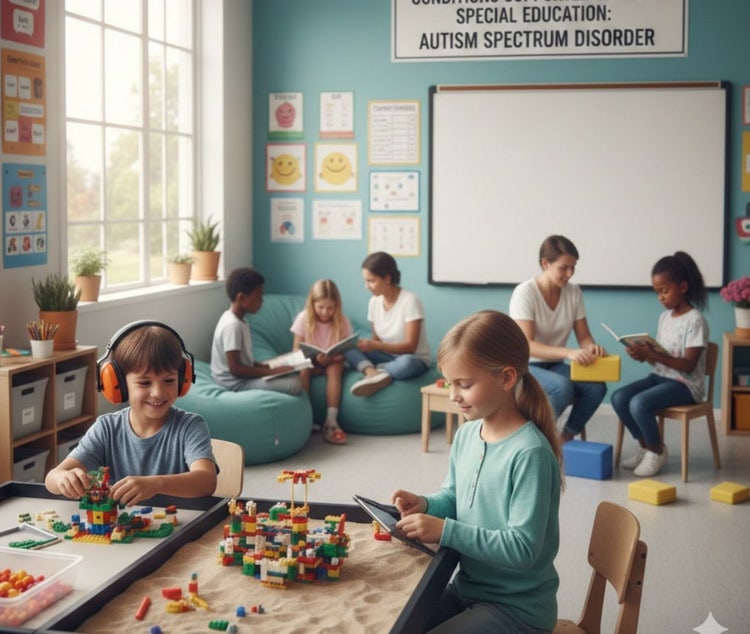
Conditions Supported Through Special Education
Autism Spectrum Disorder
Special education supports children with autism in developing academic, communication, and independent learning skills.

ADHD
Individualized strategies help children improve attention, organization, and task completion.

Learning Disabilities (Dyslexia, Dysgraphia, Dyscalculia)
Targeted instruction strengthens reading, writing, and numeracy skills.

Developmental Delay
Special education builds foundational academic and functional skills at an individualized pace.

Intellectual Disability
Programs focus on functional academics and adaptive learning based on ability levels.

Social Communication Disorder
Support targets language use and communication skills within learning settings.

Attention Difficulties
Structured teaching helps improve focus and sustained engagement during learning.
Signs Your Child May Need Special Education Support
Every child learns differently, and some children may need additional support to access learning effectively in a classroom environment. When academic challenges, attention difficulties, or behavioral concerns persist despite regular teaching, structured special education support can help identify learning gaps and provide targeted instruction tailored to a child’s needs. Early recognition of these signs allows for timely intervention, reducing frustration and helping children build confidence in their learning abilities.Children who struggle in school may also experience emotional stress, avoidance of academic tasks, or reduced motivation. Special education focuses on understanding how a child learns best and adapting teaching methods to support success across academic and functional areas.Early intervention improves academic confidence and long-term success.
Your child may benefit from special education if they:
- Struggle to keep up academically
- Have difficulty reading or writing
- Show poor concentration
- Avoid school tasks
- Have difficulty following classroom instructions
- Display behavioral challenges in school
- Need individualized teaching methods
Our Structured Special Education Approach
At Jewel Autism Centre India, our structured special education approach is designed to meet the unique learning needs of each child through individualized, evidence-informed instruction. We recognize that children learn differently, and our programs focus on bridging gaps in academic skills, cognitive development, and functional learning, while also fostering confidence, motivation, and independence.Our approach begins with a comprehensive academic and cognitive assessment to identify each child’s strengths, learning gaps, and functional abilities. Based on these insights, we design personalized learning plans that integrate one-to-one sessions, small group instruction, and structured teaching methods to support literacy, numeracy, and other foundational skills. Visual supports, hands-on activities, and behavior-integrated learning strategies ensure that lessons are engaging, practical, and aligned with each child’s learning style.Our goal is to promote independent learning and long-term academic readiness.
At Jewel Autism Centre India, our special education model includes:
- Comprehensive academic and cognitive assessment
- Structured one-to-one teaching sessions
- Small group academic training
- Functional literacy and numeracy development
- Visual supports and structured teaching methods
- Behavior-integrated learning strategies
- Parent training and home support guidance
- Regular progress reviews
Why Parents Choose Jewel Autism Centre for Special Education
Parents seeking the best support for their child’s learning and development choose Jewel Autism Centre India because our programs combine expertise, structure, and individualized care. We focus on evidence-informed teaching approaches that address each child’s academic, cognitive, and functional needs, ensuring measurable progress and long-term independence.Parents choose our Special Education programs for several reasons:
- Multidisciplinary autism and child development model
- Structured IEP-based programs
- Integrated therapy services (speech, occupational, behavior therapy)
- Parent involvement and guidance for home support
- Convenient branches in Kochi and Kottayam
- Focus on long-term academic independence and skill-building
Special Education Locations in India
Jewel Autism Centre provides structured, evidence-informed Special Education services across Kerala, ensuring children and families have access to individualized support close to home. Our centres are equipped with multidisciplinary teams and tailored programs to meet the academic and developmental needs of children with autism, ADHD, learning difficulties, and other developmental challenges.Our Special Education locations in India include:
- Special Education Kochi
- Special Education Kottayam
- Autism Special Education Kerala
- Child Development Centre Kerala
- Learning Support Centre India
Benefits of Early Special Education Intervention
Early intervention in special education plays a crucial role in helping children overcome learning challenges and reach their full potential. When children receive structured, individualized support at a young age, they develop essential academic, social, and functional skills that lay the foundation for lifelong learning and independence.Early intervention not only enhances academic outcomes but also boosts self-esteem, motivation, and emotional resilience. Children who start special education programs early are better equipped to handle school demands, generalize skills to daily life, and achieve long-term success in both learning and personal development.Early special education support helps children:
- Improve academic confidence
- Develop literacy and numeracy skills
- Increase classroom participation
- Improve attention and task completion
- Reduce frustration and behavioral challenge
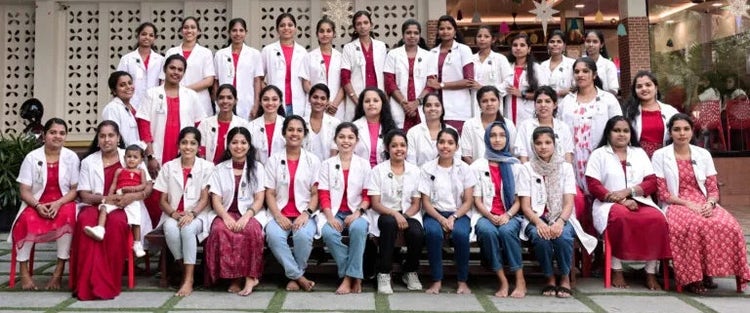
Our Remedial Educators
Recognized By Major Gulf & Indian News Platforms







What Parents Say

Shiba Shiny Babu
Jewel autism centre is a highly professional center for autistic kids. The staffs of jewel are very friendly and responsible. They have change the life of many kids including my cousins child. I appreciate each and every staff for their kind cooperation and dedication.

Nisthul Bensi
Jewel Autism Centre is a well developed centre in Kottayam for all the developmental issues in children. They provide Speech Therapy, Occupational Therapy, Special Education and Behavioral Therapy with qualified professionals. I highly recommend this centre.

John Mathew
Jewel Autism Centre is the best child development center in India which provides various services such as Speech Therapy, Occupational Therapy, Special Education, Physiotherapy, Behavioural Therapy and Child Psychology under the same roof.

Aksha Varghese
Really good place for therapy. All sorts of therapy are available. Many changes were observed after coming to this institution. Really good service was available.

Abey Varghese
It is a team approach. Which benefitted the child a lot. Many changes were observed in the child. Activities were also provided for the child to do at home. Really good and thrust worthy institution.

Mini Thomas
Our journey with jewel so far has been very good.Our son has shown good changes with 3 months therapy and we are planning to stay on more .We really appreciate the hard work put by therapists in understanding the child's needs and implementing a goal oriented approach.We high recommend this institute to everyone.

Rihan Jojo
My name is Anu from Palakkad. I brought my 4½-year-old son to Jewel with no speech or eye contact. Within one month, I saw great improvement—he started speaking, sitting better, and even writing letters. I’m very thankful to the caring therapists at Jewel.

Noah Rudra Rahul
Jewel Autism Center has been a wonderful choice for us. We’ve seen great progress in our son. The therapists are professional, caring, and involve parents in goal setting. My son enjoys the sessions, has a strong bond with the therapists, and the center feels like a second home.

Chimi pema Dakpa
Jewel Autism and Child Development Center is an excellent place with highly trained and dedicated therapists. The transparency of allowing parents to observe sessions is truly valuable. My son has shown remarkable progress in a short time, and I’ve also learned a lot as a mother. I’m very grateful to the entire Jewel team for their care and support.

Parvana
I’m grateful to the entire Jewel Autism Development Centre team for their dedication. When we joined, my daughter had poor eye contact, no response to her name, and attention difficulties. After a year of therapy, she has made remarkable progress. Special thanks to all the therapists and staff for their support.

Lionel
Jewel Autism and Development Center has been a great support for our child. In just five months, we’ve seen remarkable progress in communication, participation, and learning. We sincerely thank the management, therapists, and staff and highly recommend Jewel to other families.

Shiva Nadhu
We have been attending this therapy centre for the past six months and are very satisfied. The OT, SE, and Speech sections are excellent, with clear monthly goals and progress reviews. The therapists are professional, caring, and give personal attention, while the social work team is very supportive. We are seeing steady improvement and appreciate the team’s dedicated efforts.

Jake Nikhil
Jewel in Kottayam is a world-class facility with over two decades of experience in childhood development. Skilled therapists, efficient staff, and excellent management make it highly recommended for children needing developmental support. Families from across the world trust their international-standard care!

Anu Peter
"I've been taking my child to Jewel Child Development Center in Kakkanad for therapy, and the experience has been truly heartening. Finding the right support for your child can be overwhelming, but the team here makes the journey so much easier. The therapists are not only highly skilled but also genuinely bond with the kids, making the sessions feel more like guided play than clinical work. I've seen a visible shift in my child's confidence and skills since we started. They are also very transparent with progress reports, which helps us stay on track as parents. For anyone in the Kochi area looking for a supportive and professional environment for their child's growth, Jewel is definitely a place you can trust."